Should you tell customers you use AI? Yes. Here is what to say, and where
Tell customers you use AI, in plain words, before they have to ask.
Many small businesses now have AI drafting reminders, replies, quotes and follow-ups. Most say nothing about it. Silence feels safe. But customers are more uneasy about AI than they were a year ago, and quicker to suspect a machine wrote what they are reading.
Deciding who signs off on AI output and what staff may paste into a tool are inside jobs. This is the outside half.
Why saying nothing costs more than saying something
When a customer works it out alone, the AI is not the problem. The problem is that nobody mentioned it.
A customer who spots a pattern and was told nothing reads it as hiding. The conversation that follows is about trust, not about the email.
What a bookkeeping practice learned from one month-end reminder
A 7-person bookkeeping practice uses AI to draft month-end reminder emails. A long-standing client receives two reminders a week apart. Both use the same unusual phrasing about different issues. The client asks whether anyone actually looks at their file, then moves to another firm. That client is one of the practice's ten largest.
The practice adds a three-sentence paragraph to its website and one line to the reminder footer. The question does not come up again.
What to tell customers, in four plain parts
Where AI helps. Drafting, sorting, summarising.
Where a person reviews. Name the point where someone checks the work before anything goes out.
What AI never does here. For example, it never decides anything about a customer's money or account, and it never gives the final answer on a complaint.
How to reach a person. A name, a phone number or a reply address.
A sample website paragraph: "We use AI to draft and sort routine messages, and a member of our team reviews them before they go out. AI never makes decisions about your account or answers a complaint. To talk to a person, call us or reply to any email."
The three places the statement needs to live
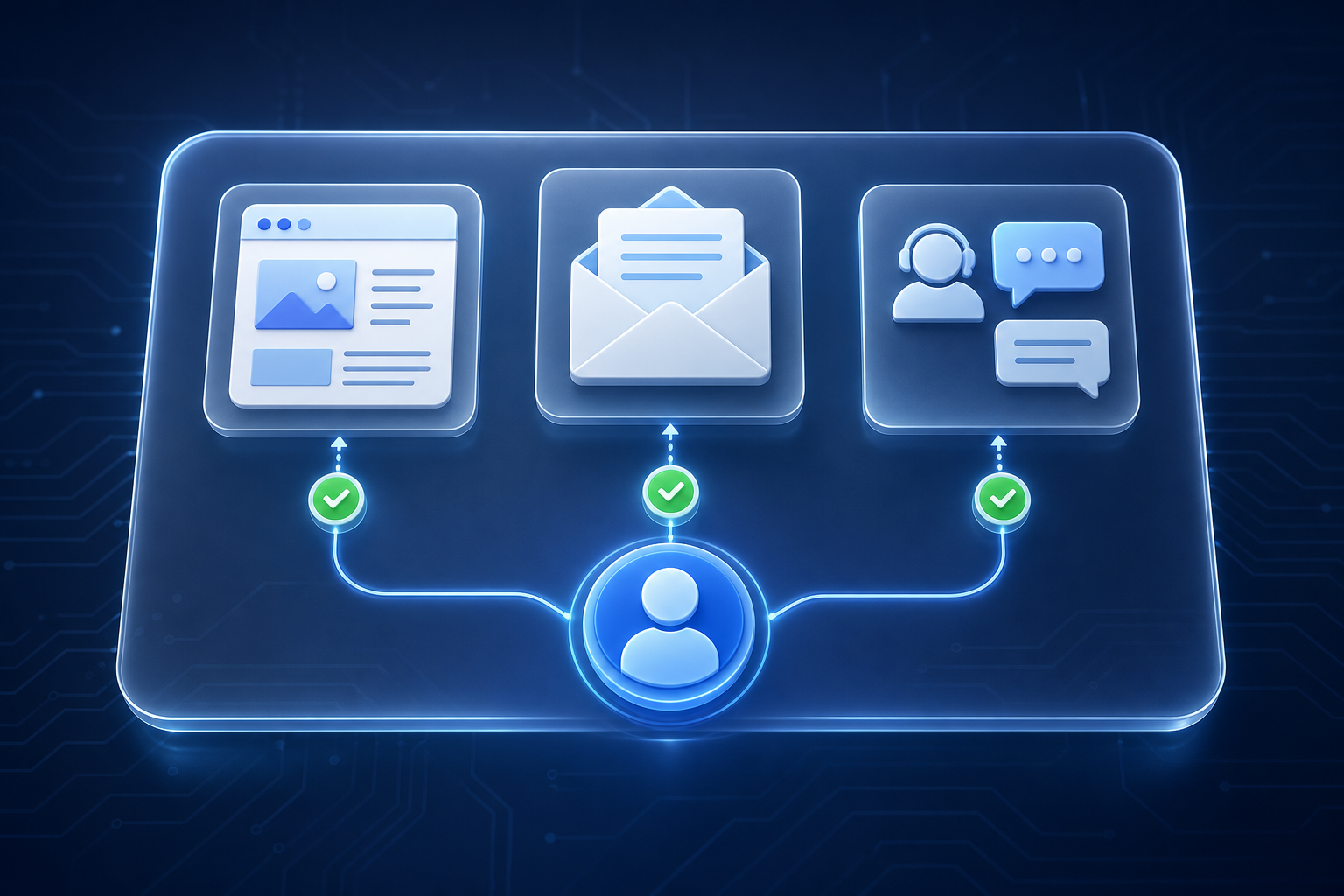
On the website. One short paragraph, easy to find.
Where AI-drafted messages go out. One line in the footer of the reminder, quote or reply that AI helped write.
In every staff member's answer. When a customer asks out loud, everyone gives the same answer. Staff should hear the wording before customers do.
What to avoid when you write it
A vague badge saying the business is "AI-powered" tells the customer nothing they can use.
A statement buried in a terms page reads as cover, not as an answer.
Any promise that is not true today. "A person reads every message" is a liability if nobody does.
Some industries have their own rules about this. Confirm yours with an advisor.
Keeping the statement true as your AI use changes
One named person owns the statement. They reread it whenever the business switches on a new AI feature or changes who reviews what.
A statement that was true in spring and wrong by autumn does more damage than no statement at all.
Say it plainly, put it where customers look, and keep one person responsible for it.
Keep exploring
If you want help writing a customer statement that matches how your business actually uses AI, contact FIT.