The AI can draft your whole workflow now. That was never the hard part.
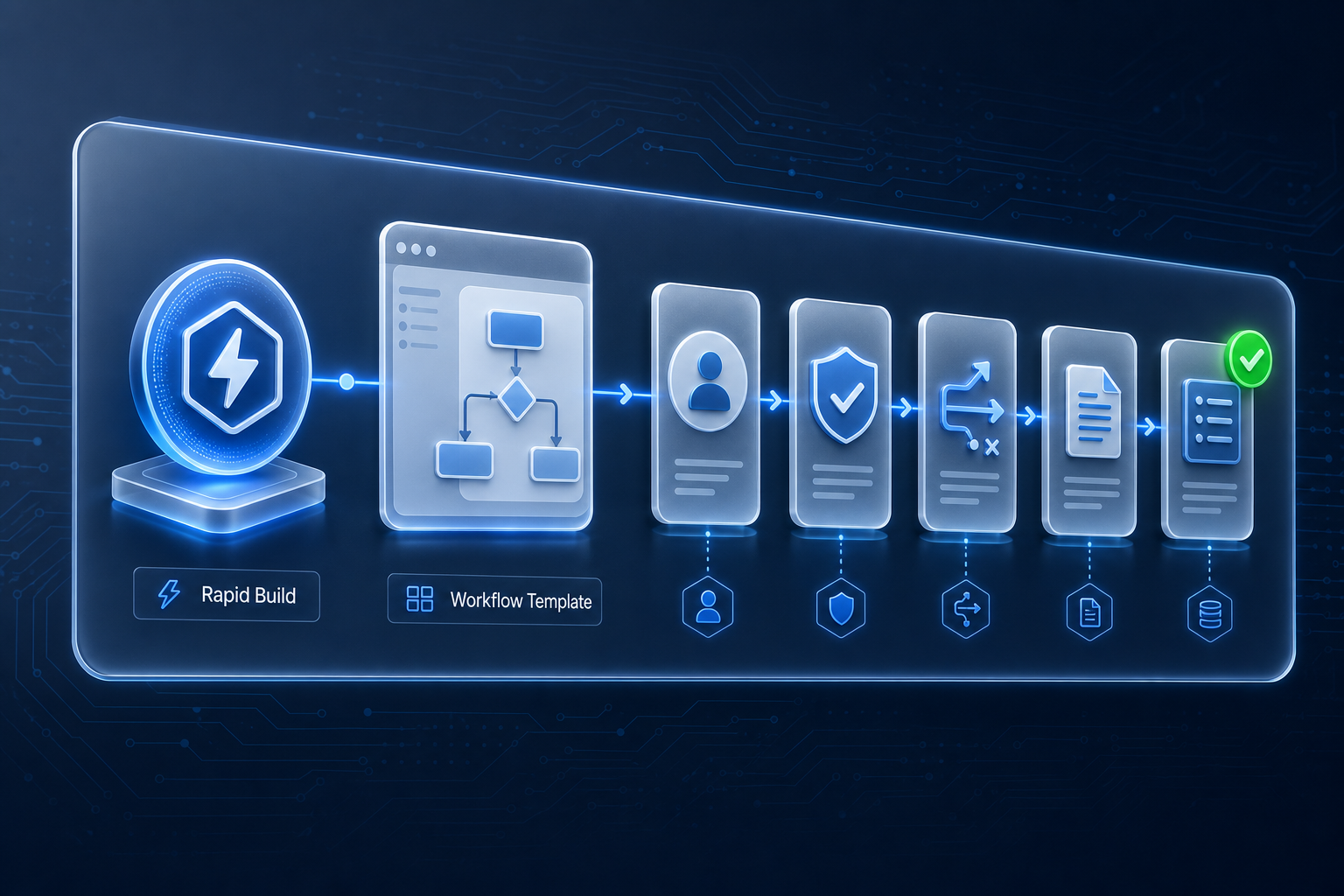
Type a sentence. Get back a working, editable workflow. That is where the major automation platforms landed this month, and it is not a demo reel. The thing runs.
Owners will read that as proof they can build it themselves now. They are right, and this is good news. But building was always the cheap twenty percent. What the assistant hands back has no owner, no approval boundary, no failure path, no runbook, and no record of what it did. And it will run unattended against real customers and real money.
What actually changed this month
The build step used to be the bottleneck. You found someone who knew the platform, waited days, and paid for their time. For many small businesses that cost was why the workflow never got built.
That bottleneck is gone. A plain sentence produces a draft you can open and edit. For a business of 2 to 50 people, it removes the biggest barrier to a first automation.
The build got cheap. That is real, and it is worth using.
Ten minutes to build, three weeks with nobody owning it
An 11-person commercial landscaping firm I worked with had an operations lead draft a quote-intake workflow in about ten minutes. Form comes in, workflow reads the service rates, builds the quote, emails the customer. It worked on the first try.
It ran for three weeks. In week two someone updated the rate table in a new sheet, and the workflow kept reading the old one. Nineteen quotes went out underpriced before a customer mentioned the number looked off. The fix took twenty minutes.
I've watched this same failure three times this year, and the build quality was never the cause. The workflow did what it was told. Nobody was assigned to check whether it still should.
The five things the assistant does not hand you
Before a workflow runs unattended, it needs five things. None are technical.
- A named owner. One person, by name, accountable for the outcome. Not a team.
- A line it may not cross. The action it cannot take without a human sign-off. Sending money, sending a price, closing a customer ticket.
- A defined failure path. What happens when a step fails. Who gets told, and what stops.
- A one-page runbook. What it does, what it touches, how to turn it off.
- A record of what it did. A log you can pull when a customer disputes something.
The assistant gives you the logic. These five are the operating package around it.
Cheap building makes those five more urgent, not less
The instinct is that easier building means less process. The opposite is true.
When a workflow took three days and a specialist, you built few of them and knew who built each one. When it takes ten minutes, they appear faster than anyone tracks them, built by whoever had the idea that morning, including people who will not be here in six months.
Volume is the new problem. Five unowned workflows are worse than five times the risk of one, because by then nobody has a list.
Budget for the packet, not the build
Treat every AI-drafted workflow as a draft until it has the five things. Until then it is a proposal, not production.
Then move the budget. You are no longer paying for build time. Spend it naming an owner, marking the line, writing the page, and turning on the log. For most workflows that is under an hour, and it is now the entire job.
The tools got faster at the easy part. What is left is the work that was always hard.
Keep exploring
This pairs well with No owner, no automation, which covers the four roles worth assigning before you turn anything on. To see which of your running workflows are missing the packet, start the AI Readiness Audit or contact FIT.