Adopted, not integrated: why most small businesses stall one step past the free trial
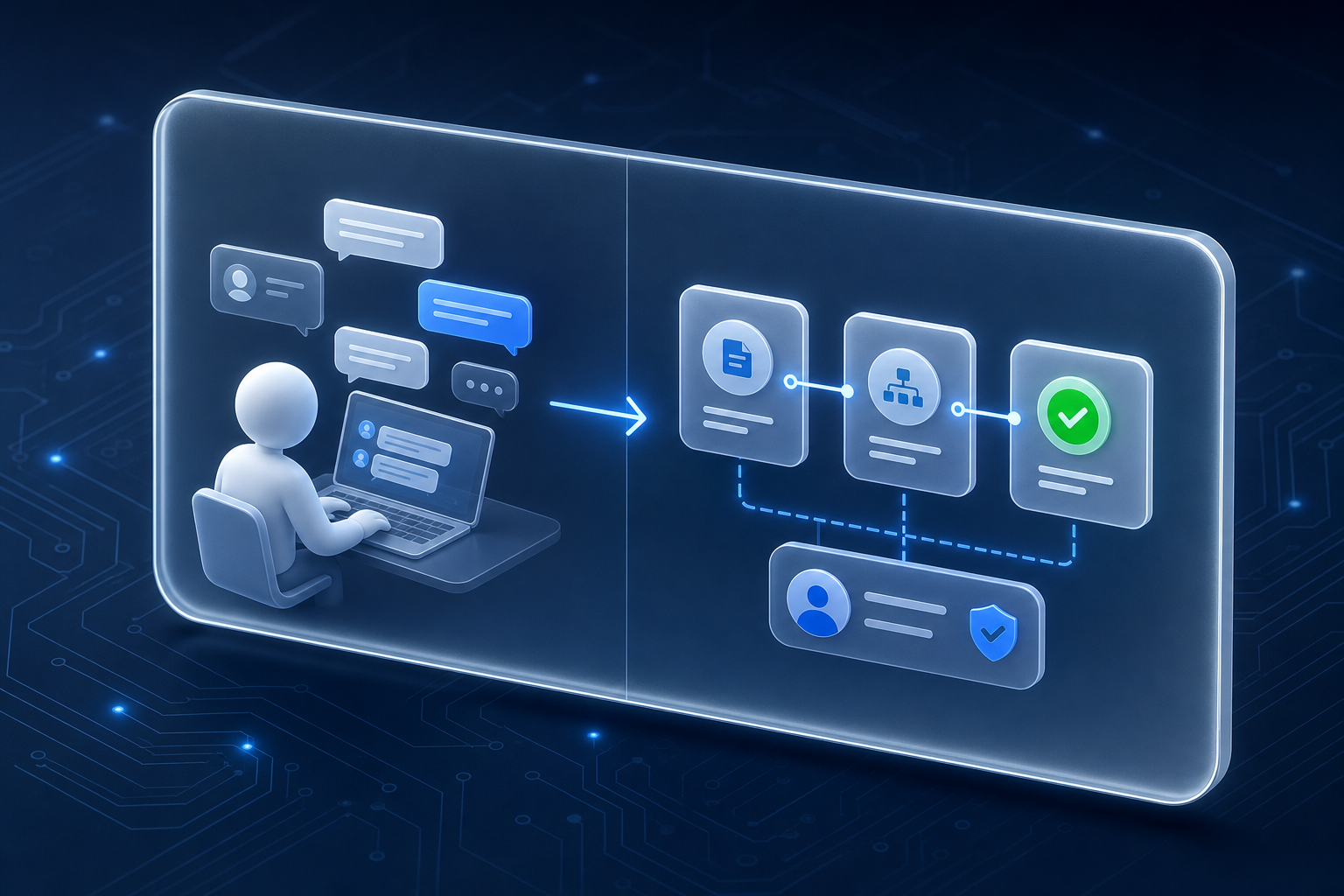
Nearly every small business has AI now. Almost none of them run on it.
Recent surveys show adoption close to universal while integration into core operations lags far behind. Owners describe the blocker as confidence, not skills. Cost barely registers. So the thing standing between you and a working automation is not money and not talent.
Adopted means someone on the team uses a chat tool
Adopted is a low bar. Someone on your team pays for a chat tool and uses it. They draft emails with it, tidy a proposal, summarise a long thread.
That is real value. It is also invisible. Nothing in the business depends on it.
Here is the test. Name the workflow that stops if the tool goes away. If you cannot, you have adopted AI. You have not integrated it.
Integrated means a named workflow runs on it
Integrated is a higher bar and a clearer one. A named workflow runs on the tool. It has an owner and a check.
I've watched this land at a 22-person accounting firm that had paid for AI seats for eight months with nothing to show for it. We picked one workflow: the weekly client status summary their account managers wrote by hand every Friday. The tool drafts it from the ledger notes. One account manager reviews and sends. That is the whole thing.
It saved each manager roughly forty minutes a week. More importantly, it became load-bearing. When the drafting step failed one Friday, someone caught it within the hour, because a named person owned it.
The confidence gap is really a starting-point gap
Owners say they lack confidence. I think they are describing something more specific and more fixable.
They are not unsure whether AI works. They have seen it work. They are unsure which of their forty daily processes to put it behind, what happens when it gets one wrong, and who is on the hook when it does.
That is not a confidence problem. It is a missing starting point. Nobody has walked the business and said: this one, start here, and here is the check that catches it when it drifts.
Confidence is the output of a good first choice, not the input.
The smallest move: one workflow, one owner, one check
The move from adopted to integrated is smaller than it looks.
One workflow. Pick a task that already happens on a schedule, has a clear input and output, and does not touch money or contracts on the first pass. Invoice coding. Meeting notes into the CRM. Inbox triage.
One owner. A named person, not a team. They decide whether it ran correctly this week. If nobody owns it after launch, quality decays fast and quietly.
One check. A review step before the output leaves the building. Human in the loop on the first version. You can loosen it once you have watched it be right forty times running.
That is integration. Not a platform. Not a rollout.
Stop buying seats and hoping
The default move when AI is not working is to buy more of it. More seats, a better model, a nicer interface.
I've seen owners triple their seat count and end the quarter exactly where they started. Seats are capacity. Capacity is not the constraint. The constraint is that no workflow has been named, owned, or checked.
Ten people with a chat tool and no owned workflow is the same operational state as one person with one. It just costs more.
Stop buying. Start naming. One workflow, this week.
Keep exploring
If you are not sure which workflow goes first, that is the question the AI Readiness Audit answers, or contact FIT and talk it through. For the failure mode one step further along, read Your AI pilot worked and nothing changed.